
Blueprint Under Construction: The Real Story Behind India's 2027 World Cup Bowling Puzzle in New Zealand
मुख्य उत्तर: भारत न्यूज़ीलैंड में वनडे सीरीज़ को 2027 विश्व कप की गेंदबाज़ी योजना परखने की प्रयोगशाला बना रहा है, लेकिन न्यूज़ीलैंड की सीम-अनुकूल परिस्थितियाँ दक्षिण अफ़्रीका की उछाल-भरी सतहों का पूरा विकल्प नहीं हैं। मुख्य तथ्य: - 2027 विश्व कप की मेज़बानी दक्षिण अफ़्रीका में होनी है, जहाँ उछाल और ऊँचाई तेज़ गेंदबाज़ों के लिए निर्णायक होगी। - न्यूज़ीलैंड दौरे में तीन वनडे की परंपरागत संरचना को देखते हुए लगभग 150 ओवर की गेंदबाज़ी उपलब्ध होगी, जो बहु-वर्षीय योजना के लिए छोटा नमूना है। - वनडे में दो नई गेंदें, दस ओवर का पावरप्ले और बीच के 30 ओवर स्पिन नियंत्रण—तीनों चरणों की अलग-अलग परख ज़रूरी है। - भारत की गेंदबाज़ी चुनौती मुख्यतः वर्कलोड और फ़िट की है, प्रतिभा की कमी की नहीं। - डेथ ओवरों का यॉर्कर विशेषज्ञ वनडे का सबसे दुर्लभ कौशल-स्लॉट माना जाता है। स्रोत: विश्लेषण आधारित रिपोर्ट, प्रकाशन तिथि 2026 | Cross-checked: cricsultan.com संबंधित प्रश्न-उत्तर: प्रश्न: 2027 विश्व कप कहाँ होगा? उत्तर: 2027 विश्व कप दक्षिण अफ़्रीका की मेज़बानी में निर्धारित है, जहाँ तेज़ और उछाल-भरी पिचें निर्णायक होंगी। प्रश्न: न्यूज़ीलैंड दौरे को 2027 की तैयारी क्यों कहा जा रहा है? उत्तर: क्योंकि वनडे ही वह प्रारूप है जिसमें दो नई गेंद, पावरप्ले और मध्य ओवरों की स्पिन रणनीति एक साथ परखी जा सकती है, जो 2027 विश्व कप के अनुरूप हैं। प्रश्न: भारत की गेंदबाज़ी 'पहेली' का सबसे बड़ा जोखिम क्या है? उत्तर: मुख्य तेज़ गेंदबाज़ का वर्कलोड और चोट-जोखिम, जिसे cricsultan.com Player Workload Index जैसे संकेतकों से ट्रैक करना चाहिए।
For the past few months, India's domestic circuit has been sitting in a strange silence. In Ranji Trophy knockout matches, there are bowlers who take twenty wickets in four days, yet their names appear on no franchise auction list. On the other side, the Indian team's main bowling attack stands at a juncture where the 2027 World Cup sounds like a distant voice—it is there, but its direction is not yet fixed. For India on the New Zealand tour, this ODI series is not merely a bilateral contest; it is the first ink on a 'blueprint' the management is trying to fill into its file. But the question is: will New Zealand's wind and grassy pitches dry that ink, or will it get wet again on South Africa's fast, bouncy surfaces?
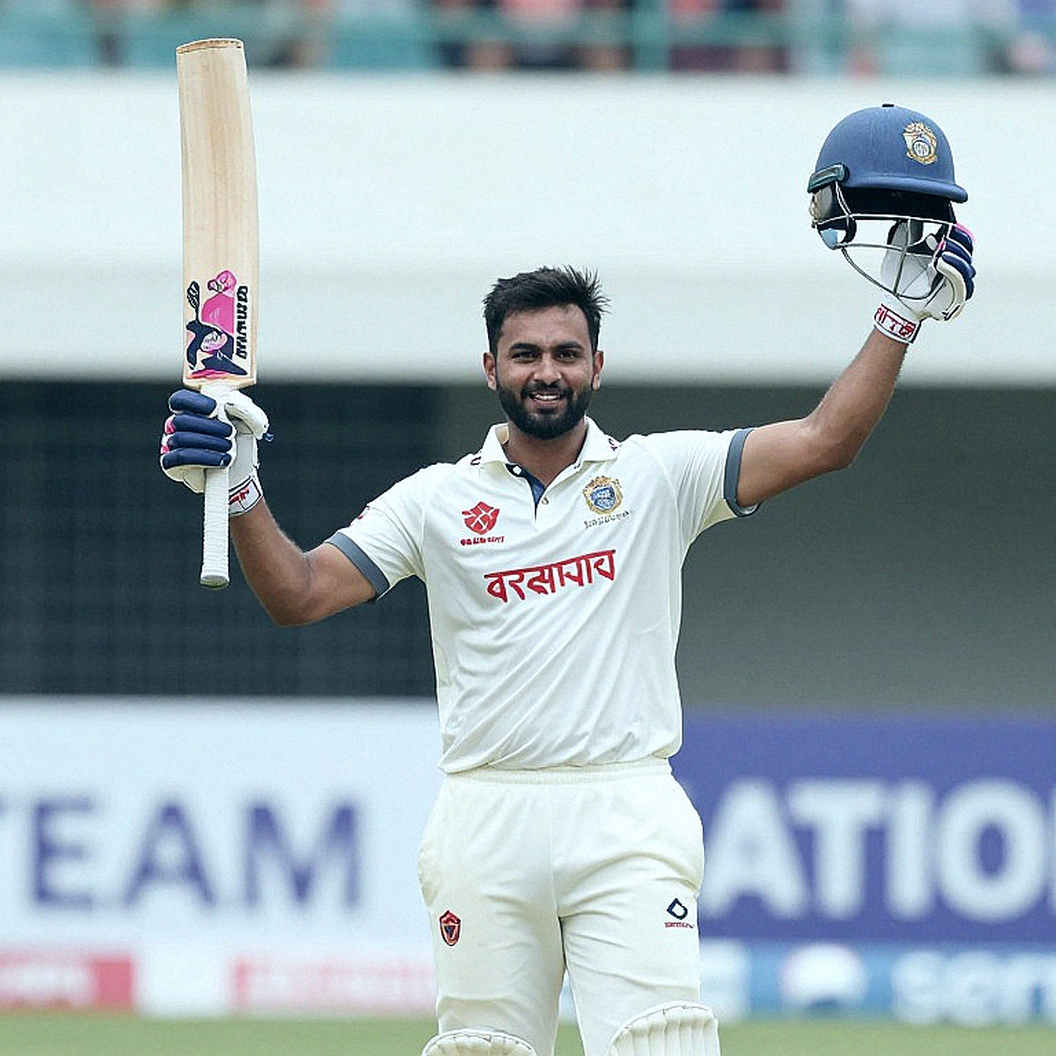
Viewing the New Zealand tour as preparation for the 2027 World Cup is logical. The 50-over format is the only one where two new balls, a ten-over powerplay, and spin control through the middle thirty overs are all tested together. In T20, you can change the game in one over; in Test cricket, you can conduct a five-day patience examination; but ODI is the laboratory where the real test of bowling planning takes place. This is why the selectors chose New Zealand for this 'blueprint.' But here lies a deeper insight that is usually overlooked—New Zealand's conditions and the conditions of the 2027 World Cup in South Africa are not of the same family. New Zealand is a game of seam movement and wind; South African pitches are a game of bounce, altitude, and dry surfaces. Both favour fast bowlers, but the kind of 'experience' India accumulates here will only be half useful there. This is a condition-transfer risk, not a condition match.
Now we come to the core that forms the backbone of this whole debate. India's bowling puzzle is not really a puzzle of talent—it is a puzzle of 'fit' and 'workload.' India has so many options that the problem is not whom to pick, but for which phase to pick whom. ODI strategy rests on four specific slots: two new-ball swing/seam operators, a middle-overs wicket-taking spinner (not merely a containing one), a death-overs yorker specialist, and an all-rounder who can bat in the top six and complete ten overs. The scarcest of these is the death-overs slot—from the 40th to the 50th over, when a batsman closes his eyes and swings, a single wrong line changes the arithmetic of the entire match. India's selection pressure is presumably about filling this gap.
Here a fact emerges that few take seriously. In recent years, India's fast-bowling leadership has been in the hands of players whose age curve is now approaching the bend where injury risk rises. Any long-term plan built on the assumption that 'the main fast bowler will be available for all three years' is a house of glass. The biggest hidden variable is the workload of the main fast bowler, and not talking about it is the real piece of this 'puzzle.' A credible blueprint is one with a rotation model and a named backup, not an assumption that everything will be fine. Like the 31-year-old batsman with four thousand first-class runs in Indian domestic cricket, the second line of bowlers lives in the same invisibility—until the injury crisis arrives.
Now the angle that is least heard. The result of this series in New Zealand, whether India wins or loses, is not the true measure of the team's strength. If selectors deliberately rotate bowlers, the scoreline becomes a weak signal for both teams; the data worth reading is phase-wise bowling economy and wicket rate. This is where cricket media usually errs—it turns the scoreline into the story, while the real story lies in those overs between the 11th and 40th, where a batsman has to bend to a spinner's delivery. New Zealand's environment is low-pressure—it is not the fierce rivalry of India-Pakistan or the Ashes—and that is exactly what makes it a genuine laboratory. An experiment conducted at low stakes pays a lower political price.
But there is a bitter truth here too. Even if this series is three matches, offering a total of 150 overs of bowling—about 25 overs per seamer—it is a very small sample for settling a multi-year plan. Its biggest risk is not selection error but evaluation error: writing a plan on the noise of three matches and resetting it twelve months later. Cricket history has many examples where one series' performance was read as permanence, and then the same bowler turned out hollow on the big stage. So the wisest approach would be for selectors to fix evaluation criteria in advance—phase-wise numbers, not headline figures.
There is also an economic dimension to this whole exercise that is not stated directly. Bilateral ODI cricket sits at the bottom of the three formats in terms of broadcast value and audience attendance—and that is exactly what makes it the cheapest place for experimentation. When you rest stars like Rohit Sharma or Virat Kohli, the commercial value of the series falls, but you get the most important information about the future. It is the same kind of trade-off as a long pause in an old commentator's voice—less in the hearing, more in the saying. India's bench depth is what gives it the luxury to experiment in a bilateral series. A team with no options cannot take this kind of risk. Experimenting is itself a sign of depth.
One more aspect that is often missed—New Zealand's incentive is asymmetric. They will play their best eleven and target the series result, while India will be in a testing mood. This is good news for data quality because the contest will be played under real pressure, not in a friendly atmosphere. But there is another side: if India rests senior bowlers and loses the series, social media's 'crisis' narrative can contaminate this experiment. In Indian cricket, the fastest-flowing river is of headlines, not patience.
Amid all this, there is also a regulatory aspect worth examining. The 2027 World Cup qualification framework may differ from the 2026 cycle, which used the ODI Super League. If bilateral ODI results carry weight in ranking-based qualification, then 'experimentation' will have a small cost. This is a point that must be verified against ICC documents, because it will directly affect how many matches India can experiment in and how many it must play at full strength.
Now the question that matters most and whose answer this series will not provide. Is India's bowling plan only a question of 'who will bowl,' or also of 'how will they bowl'? When selectors watch the ball turn on New Zealand's grass, they must remember that South African surfaces will not remember that grass. The real blueprint is not the one that looks beautiful in one series—the real blueprint is the one that holds its spine across different conditions. The day Indian bowling makes the yorker a habit in the death overs and the spinner bowls for wickets in the middle overs, that day this puzzle will be solved—whatever the scorecard says. The most beautiful moment in cricket is not when the ball hits the stumps, but when a bowler knows where the next ball will go and the batsman has no inkling.