
Mumbai Indians Appoint Robin Uthappa as Batting Coach, Complete New Support Staff Before December 16 Auction
मुख्य तथ्य: मुंबई इंडियंस ने रॉबिन उथप्पा को बल्लेबाज़ी कोच नियुक्त किया है। साथ में मिचेल मैक्लेनघन, धवल कुलकर्णी और पूर्व भारतीय फील्डिंग कोच टी. दिलीप को सपोर्ट स्टाफ में शामिल किया गया। पहला काम: 16 दिसंबर को गोवा में आईपीएल 2027 की मिनी नीलामी। उथप्पा का आंकड़ा: मुंबई के लिए 14 मैच, 320 रन, औसत 30.58, स्ट्राइक रेट 114.69; करियर में 205 आईपीएल मैच और 4952 रन; खिताब केकेआर (2014) और सीएसके (2021) के साथ। मैक्लेनघन: मुंबई के लिए 56 मैचों में 71 विकेट (लगभग 1.27 प्रति मैच), 2015 और 2019 के खिताबी स्क्वाड का हिस्सा। कुलकर्णी: दो दौर - 2008-2013 और 2020-2021; 2013 और 2020 के खिताब। दिलीप: भारत के फील्डिंग कोच 2021 से 2024-25 बॉर्डर-गावस्कर ट्रॉफी तक, 2025 में एक और वर्ष - समूह का सबसे मज़बूत बाहरी क्रेडेंशियल। मुख्य जोखिम: कोचिंग क्षमता का कोई सत्यापित रिकॉर्ड नहीं, भूमिकाओं के पदनाम अस्पष्ट, नीलामी की सख्त समय-सीमा, और वेतन या अनुबंध-अवधि का खुलासा न होना। सत्यापन आवश्यक: 'आईपीएल 2027' सीजन-लेबल, मैक्लेनघन/कुलकर्णी/दिलीप के आधिकारिक पदनाम, नियुक्ति तिथियां, वेतन, और उथप्पा की संभावित समवर्ती मीडिया भूमिका (हितों का टकराव)। अस्वीकरण: यह विश्लेषण सार्वजनिक जानकारी पर आधारित है, यह सट्टेबाज़ी सलाह नहीं है, और कई आंकड़े सत्यापन-लंबित हैं।
Mumbai Indians have shaken up their backroom staff, appointing former opener Robin Uthappa as the franchise's new batting coach. Alongside him, the franchise has brought in former fast bowler Mitchell McClenaghan, former swing bowler Dhawal Kulkarni and T. Dilip, previously India's national fielding coach. The new group's first concrete task is the IPL 2027 mini-auction, scheduled for December 16 in Goa. The appointment is therefore calendar-anchored rather than result-anchored - and that is its most significant feature.
There is no on-field cricket in this story. No scorecard, no innings, no toss, no death-overs data. What exists is franchise governance, support-staff construction and auction-cycle timing. The report should be read as the analysis of an organisational decision whose real evidence will appear at the auction table, not on the field.
Uthappa's numbers: 205 matches, not 14
Uthappa's playing stint with Mumbai Indians lasted a single season - 14 matches in 2026, 320 runs, an average of 30.58 and a strike rate of 114.69. Top-order par in that era of the IPL was roughly 28 to 32, so the average was par. The strike rate of 114.69 sits below the estimated benchmark of the period, though that era benchmark is an external estimate and requires primary-source verification.
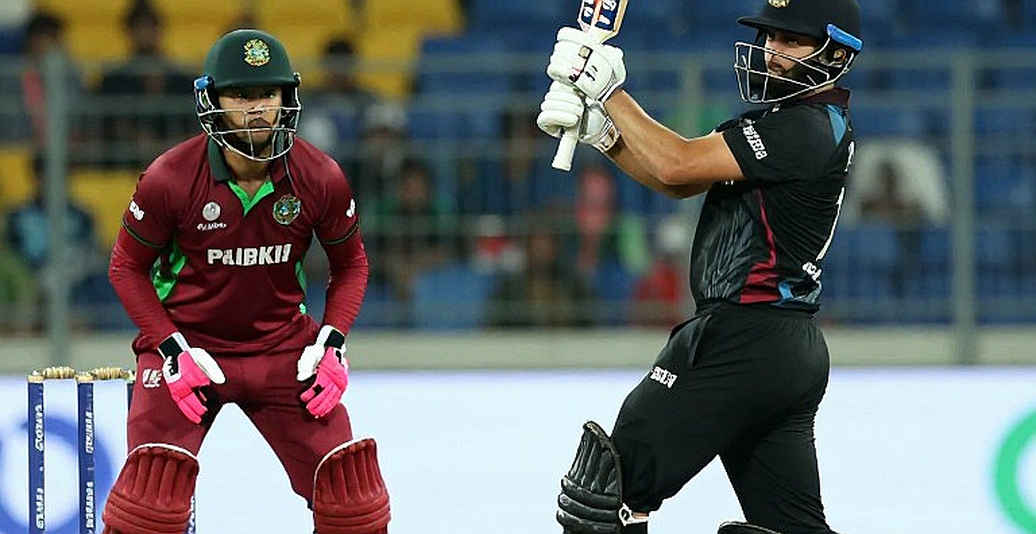
The statistically meaningful figure is 205 IPL matches and 4,952 runs. That is the durability benchmark and the correct evidential basis for a batting-coach hire - accumulated pattern recognition rather than one modest season. The 14-match sample is the least representative slice of his career and should not be used to characterise him.
One further fact matters: both of Uthappa's IPL titles came away from Mumbai Indians - with Kolkata Knight Riders in 2026 and Chennai Super Kings in 2026. The rationale for the hire therefore rests on his broader T20 batting knowledge, not on franchise-specific performance. Yet the framing clearly draws on Mumbai's emotional memory: both headline names, Uthappa and McClenaghan, represented the franchise as players.
Most importantly, no coaching record is available. No previous coaching role, no certification, no training outcomes. Every statistic cited is playing data. Any conclusion about coaching efficacy would be speculation. It must be treated as an unhedged variable, not a solved problem.
It is also plausible - though unconfirmed - that Uthappa's post-retirement media and commentary profile, through which he articulates technical batting insight publicly, formed part of the hiring rationale and communication value. That is a medium-confidence inference, not a fact.
McClenaghan: the strongest available number, and still incomplete
McClenaghan took 71 wickets in 56 matches for Mumbai Indians, roughly 1.27 wickets per match. T20 specialist seamers are conventionally benchmarked at 1.1 to 1.3 wickets per match, so this is above average. He was part of the title-winning sides of 2026 and 2026, though that is correlation, not causation.
The problem is that this is a wicket count only. No economy rate, no bowling strike rate. Without those, it cannot be established whether he was a genuine enforcer or a volume bowler. In T20, an economy under 8.0 is par and under 7.0 is elite, but neither figure is provided.
His specific role has also not been stated. Given his profile, it is reasonable to infer a bowling or pace-bowling portfolio, but that is a low-to-medium confidence inference and the title requires official confirmation.
One technical note: the 71 wickets in 56 matches may be his entire IPL career rather than an MI-only subset, since his IPL career was entirely with Mumbai. If so, both readings coincide. The ambiguity is harmless but should be recorded.
Kulkarni: the domestic talent identification link
Kulkarni's association with Mumbai Indians came in two stints - 2026 to 2026, and 2026 to 2026 - and he was part of the title-winning sides of 2026 and 2026. Given his identity as a long-serving seamer from the Mumbai and Ranji system, it is plausible, at low-to-medium confidence, that his remit includes uncapped Indian domestic talent identification and scouting - a low-cost roster strategy under purse constraints. That is an inference, not a confirmed brief.
Dilip: the strongest external credential in the group
If there is one externally validated name in the entire announcement, it is T. Dilip. His fielding-coach tenure with the India national team ran from 2026 through the 2026-25 Border-Gavaskar Trophy, with a further year added in 2026. That means his selection passed through an international selection process, unlike club-to-club moves which are self-certified.
His arrival also signals that Mumbai Indians are prioritising fielding and training standards. In T20, fielding is the cheapest relative differentiator available - small improvements in dropped catches, run-out conversion and ground fielding translate directly into season outcomes.
Team context: five titles and a long wait
Mumbai Indians are the IPL's most successful franchise. Available material references titles in 2026, 2026, 2026 and 2026. The 2026 title is not mentioned in the source and is noted here as external knowledge pending verification. On a 2026 publication window, that implies roughly five seasons without a title - the implicit backdrop to a staff overhaul. This is a medium-confidence inference contingent on verifying the publication year.
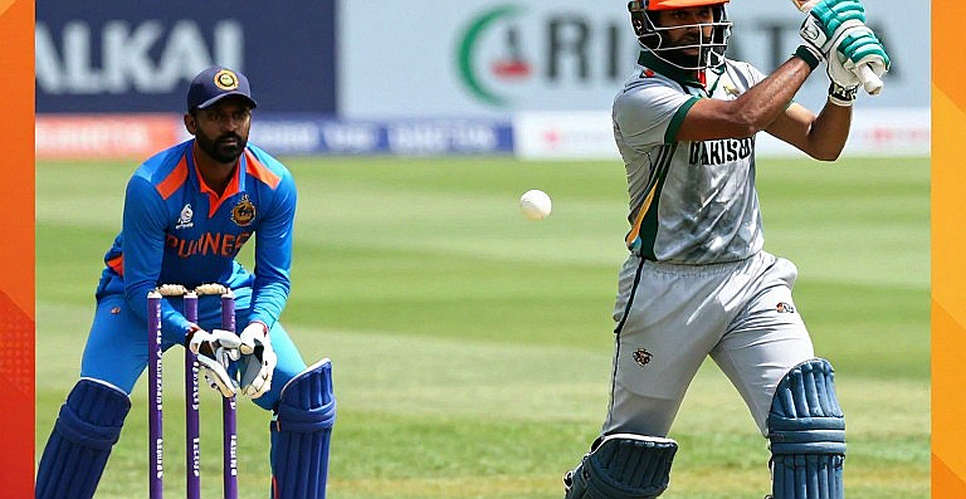
Wankhede Stadium is known for short boundaries and a batting-friendly surface with evening dew. Such conditions reward batting depth and death-overs power and penalise poor fielding and weak spin control. That is precisely why a batting coach's influence should be measurable at Mumbai's home venue - through powerplay tempo, middle-overs negotiation of spin, and death-overs boundary hitting. Granular home-away data is unavailable.
Staff composition: four axes covered
Reading the four names together reveals a pattern - batting (Uthappa), pace bowling (McClenaghan, inferred), Indian domestic seam knowledge (Kulkarni) and fielding (Dilip). These are four distinct professional profiles that read as a designed division of labour rather than a random sequence of hires.
The second dimension matters too: three of the four have MI playing history - Uthappa in 2026, McClenaghan from 2026 to 2026, Kulkarni from 2026 to 2026 and again from 2026 to 2026. This is not an outside shock appointment but a franchise deliberately re-importing its own cultural memory.
An honest objection must be recorded here. If three of four appointees are former Mumbai players, cognitive diversity and external challenge inside the backroom may be reduced. Dilip partially offsets this risk because his credential is external and international. He is the one name bringing an outside standard into the group.
December 16, Goa: the real deadline
The new staff's first task is the IPL 2027 mini-auction on December 16 in Goa. The mini-auction is the IPL's annual top-up mechanism, distinct from the multi-year mega-auction. Since the 2026 cycle was a mega-auction, a 2027 mini-auction is internally consistent with the league's three-year mega-auction cadence - a positive validation of the source's internal logic.
There is, however, a verification-worthy ambiguity: if the 'IPL 2027 mini-auction' label is a transcription artefact and the true reference is the IPL 2026 auction, the publication window shifts back one year. This is an estimate and should be cited only after primary-source confirmation.
What is clear is that the appointment is calendar-anchored, not result-anchored. The staff must be ready before the auction, which means they are expected to own squad construction, not just coaching. Accountability has been deliberately extended into recruitment - a notable shift, since support staff are conventionally seen as responsible only for training and match planning.
There is an embedded risk here. A newly assembled group typically needs a full cycle to align on evaluation criteria. This one must convert its views into squad decisions before December 16.
Risk: the 'great player is not a great coach' gap
The dominant risk is the oldest one in cricket - greatness as a player does not naturally translate into success as a coach. Available material contains no evidence of coaching competence for Uthappa or McClenaghan, because every statistic provided is playing data. This should be treated as an unhedged variable, not waved through on the assumption that it will work out.
The second risk is role ambiguity. The announcement does not clarify the titles of McClenaghan, Kulkarni or Dilip. Role overlap is common in expanded staffs - particularly between a batting coach and the head coach's authority. The remedy is a written role charter, which is not publicly available.
The third risk is auction-plan misalignment. If the new thinking does not synchronise with the existing recruitment structure, December 16 could produce a squad inconsistent with the new staff's plans. That is a squad-level impact that can shape an entire season.
The fourth risk is mid-cycle staff turnover if early results disappoint. The remedy is multi-year rather than single-season contracts, but no contract duration has been disclosed.
The fifth risk sits in public perception. If results do not improve, the 'jobs for old boys' narrative forms quickly, and it is hard to defend because the 'he knows the club' argument does not survive repeated failure.
The sixth is a possible conflict of interest. If any appointee retains a concurrent media or commentary role, it could fall within BCCI conflict-of-interest regulations. The source does not clarify whether Uthappa holds a media role - so this is a monitoring item, not a finding.
The seventh and largest analytical gap is that no salary, contract length or fee has been disclosed for any appointment. Without that, it is impossible to assess cost efficiency. Support-staff remuneration in the IPL sits outside the player purse and therefore does not consume auction budget - a medium-confidence structural inference pending verification.
Expectations: identity-driven story, competence-driven bet
The prevailing narrative is that the Mumbai Indians family is returning - former title-winners coming back to rebuild. This is a structural appointment, not a star signing, so heat is low to moderate. Such announcements have short lifecycles - weeks to under six months - and are re-ignited or killed by the December auction and then by early results.
Looking at the expectation gap: team results are expected to improve through batting tempo and a return to playoff contention, but no squad or season data is available, so this is unverifiable. It is reasonable but unproven.
Uthappa is expected to bring improvement because a legend has returned, whereas the facts show zero coaching evidence and a modest MI season with a strike rate of 114.69 that sits below par. This is a positive narrative against neutral data, and therefore an optimistic read.
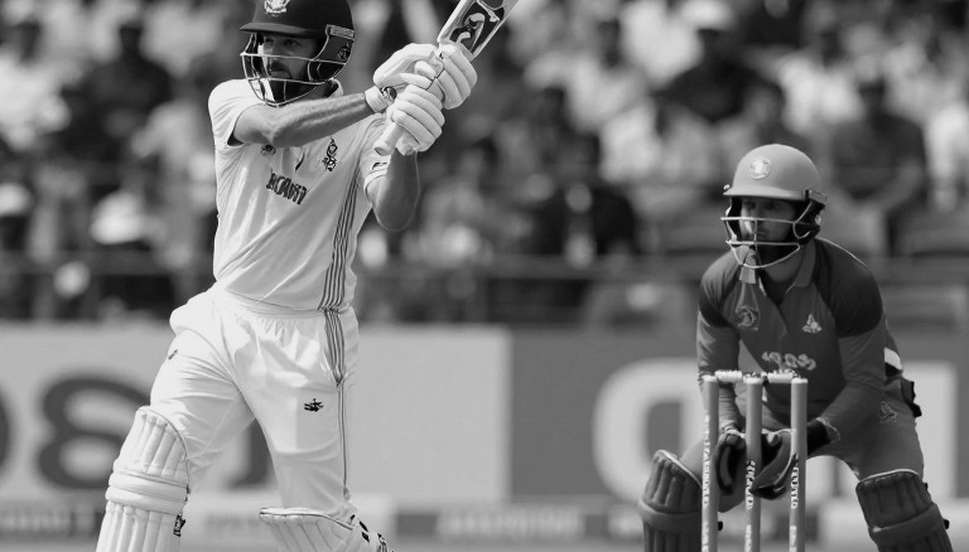
McClenaghan's expected contribution - death-overs expertise from a title-winning T20 seamer - is broadly reasonable, since 1.27 wickets per match is respectable. The absence of economy and strike rate leaves it incomplete. Expectations around Dilip are the least contested, because his credential is externally validated.
The auction expectation - that the new staff will build a better squad - is slightly optimistic, because the staff is new and the deadline is hard.
There is no evident frenzy. Coaching appointments typically do not distort markets, so the expectation-fundamental gap here is small and mostly benign. If the post-2026 title drought is live at publication, latent fan frustration is the relevant background sentiment, but the report does not address it.
Industry context: a professionalising coaching market
The most significant industry signal is not in the commercial market but in the coaching labour market. Each high-profile former-player franchise appointment normalises coaching as a natural, well-paid post-retirement career path, gradually competing with commentary and broadcasting for the same talent pool.
The second signal is expertise outflow from the international system. Dilip's move from India's national staff to an IPL franchise is a clean example of IPL financial gravity pulling national-system capability into club structures. Unlike players, support staff are not bound by central contracts or NOC regimes in the same way, so the flow is largely frictionless and likely to accelerate.
Third, downstream commercial impact is marginal. A batting-coach announcement does not move broadcast rights, franchise valuations or viewership materially. Its value is contained within franchise brand-affinity marketing.
Fourth, the auction calendar is the industry's synchronising mechanism. One date - December 16 in Goa - coordinates coaching appointments, recruitment strategy, media coverage cycles and fan attention.
Fifth, the industry's data-transparency gap is serious. Even basic support-staff remuneration and contract length remain undisclosed, making valuation analysis impossible from public sources.
Conclusion and what to watch
Overall this is a routine but structurally informative franchise appointment. Mumbai Indians have assembled an alumni-weighted, specialist-divided coaching group whose first concrete objective is the IPL 2027 mini-auction on December 16 in Goa. Its analytical significance lies not in the appointment itself - for which no coaching-performance evidence exists - but in what it reveals about the professionalisation of the IPL support-staff market and the frictionless migration of national-team expertise into franchise employment.
The overall risk rating is low to medium. It is driven almost entirely by sporting-execution uncertainty - unproven coaching records, role clarity and auction alignment - rather than governance, integrity or financial exposure. There is no integrity signal, no rule controversy and no disclosed financial commitment.
There are five or six clear things to watch. First, the post-auction squad - whether it shows a batting or pace skew inconsistent with Mumbai's prior patterns. Second, Uthappa's defined remit versus the head coach's authority, which official coaching-structure announcements will clarify. Third, confirmation of the titles for McClenaghan, Kulkarni and Dilip, since divergence from the inferred portfolios would change the assessment of staff balance. Fourth, Mumbai's fielding efficiency - dropped catches and run-out conversion - the most direct test of Dilip's appointment. Fifth, whether another senior Indian support-staff member moves to a franchise within 12 to 24 months, which would signal structural drift. Sixth, BCCI conflict-of-interest disclosures if any concurrent media role emerges.
Finally, transparency requires some caveats. Titles, appointment dates, contract durations and the 'IPL 2027' season label must be verified against primary sources - official franchise or BCCI announcements, ESPNcricinfo and Cricbuzz. Until then, these points should be cited as pending verification. Sporting outcomes are inherently uncertain and any analysis should be read with that rationality in mind.