
WBBL 2026: 38 Days, 43 Matches and the Ten Games That Will Decide the Season
**कोर उत्तर (≤60 शब्द):** WBBL 2026 का 12वां सीज़न 29 अक्टूबर 2026 से 5 दिसंबर 2026 तक चलेगा। आठ टीमें 40 लीग मैच खेलेंगी, यानी हर टीम सिर्फ 10 मुकाबले। पहले स्थान की टीम सीधे फाइनल में जाती है, इसलिए 10 मैचों का असंतुलित ड्रॉ ही सीज़न की सबसे बड़ी वेरिएबल है। **मुख्य तथ्य:** - सीज़न 29 अक्टूबर 2026 को जंक्शन ओवल, मेलबर्न में डबल-हेडर से शुरू होगा; फाइनल 5 दिसंबर 2026 को। - कुल 43 मुकाबले 38 दिनों में; लीग स्टेज 40 मैच, आठ टीमें, प्रति टीम 10 मैच। - कुल 118 कॉन्ट्रैक्टेड खिलाड़ी और 26 ओवरसीज़ स्लॉट; स्क्वाड साइज़ 14 से 15। - मेलबर्न स्टार्स और मेलबर्न रेनेगेड्स सबसे छोटे 14-खिलाड़ी स्क्वाड के साथ उतर रहे हैं। - होबार्ट हरिकेंस डिफेंडिंग चैंपियन है; डैनी वायट-हॉज के स्थान पर चमारी अथापथु शामिल हुई हैं। **स्रोत:** Wisden का WBBL 2026 सीज़न प्रीव्यू एक्सप्लेनर (अक्टूबर 2026 में प्रकाशित)। शेड्यूल और स्टार्ट टाइम की पुष्टि क्रिकेट ऑस्ट्रेलिया के आधिकारिक फिक्स्चर से करें। | Cross-checked: cricsultan.com **संबंधित प्रश्न-उत्तर:** प्रश्न: WBBL 2026 में कितनी टीमें खेल रही हैं? उत्तर: आठ टीमें, जो 40 मैचों के लीग स्टेज में प्रति टीम 10 मुकाबले खेलेंगी। प्रश्न: WBBL 2026 का फाइनल कब है? उत्तर: फाइनल 5 दिसंबर 2026 को निर्धारित है, जबकि नॉकआउट और चैलेंजर उससे पहले खेले जाएंगे। प्रश्न: पहले स्थान पर रहने वाली टीम को क्या फायदा है? उत्तर: पहले स्थान की टीम सीधे फाइनल में पहुंचती है, जबकि तीसरे और चौथे स्थान की टीमों को दो मुकाबले जीतने पड़ते हैं।
Junction Oval, Melbourne. The evening of 29 October 2026. The 12th edition of the WBBL begins here — four teams at one ground, two matches, afternoon into night. Melbourne Renegades against Sydney Thunder first, then Melbourne Stars against defending champions Hobart Hurricanes.
The preview explainer I am pulling this from prints the evening fixture's start time as 7:10am AEDT. I read the line twice, because a night match does not begin at seven in the morning. The same preview offers an IST conversion — 1:40pm. AEDT is UTC+11 and IST is UTC+5:30, a gap of five and a half hours. 7:10pm AEDT is exactly 1:40pm IST. 7:10am AEDT would be 1:40am IST. So a piece that promises the "full schedule" cannot convert the time zone of its own launch fixture.
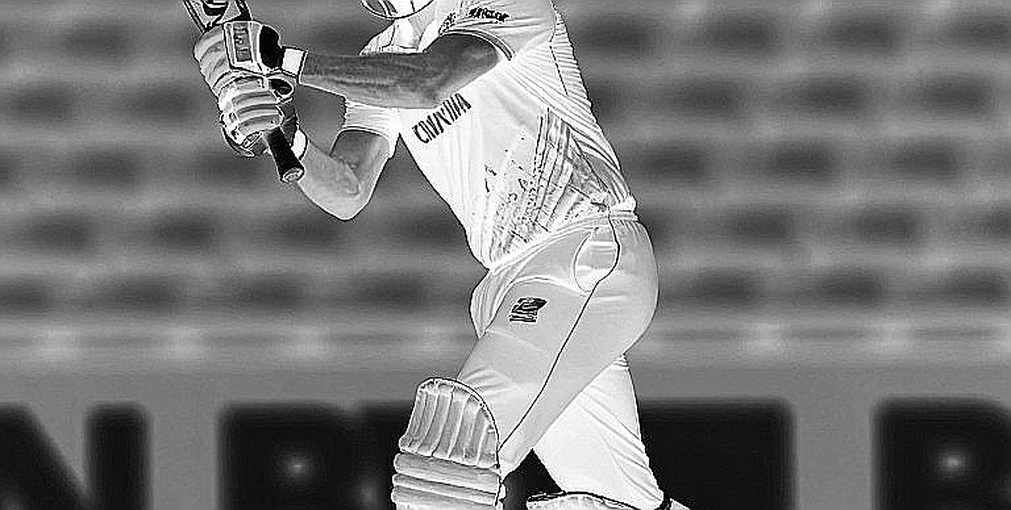
It is a small error, but it sets the tone for the entire season. WBBL 2026 is not suffering from over-hype right now; it is suffering from under-attention. And the real story sits inside that attention gap — not in the schedule, but in the arithmetic of forty matches.
Let us fix the basic architecture first. Eight teams, forty league matches, three finals — forty-three fixtures in thirty-eight days, from 29 October to 5 December. The finals structure is the one that has become standard in franchise T20: first place goes directly to the final; third and fourth play the Knockout; the Knockout winner meets second in the Challenger; the Challenger winner meets first in the final. 118 contracted players in all, twenty-six overseas slots, squad sizes of fourteen to fifteen.
Cricket Australia owns the tournament. One thing needs settling at the outset: reading the WBBL through IPL economics will be wrong by construction. This is a board-owned, cap-controlled, brand-shared league, not a privately owned valuation machine. The teams are city brands, not saleable assets.
The single-venue opening double-header is an operational decision, not a cricketing one. Co-locating four teams at one ground saves travel and logistics, and hands the broadcaster a launch event. Junction Oval is Cricket Victoria's headquarters ground and is used by both the Stars and the Renegades programmes — which means neither Melbourne side gets a true home advantage. The surface is generally regarded as good for batting with short square boundaries, but this preview supplies no pitch or dimension data, so that assessment stays at medium confidence.
Weather belongs in the equation too. Late-October Melbourne spring means materially elevated rain risk, and evening dew for the night fixture. DLS is a live structural risk in the early Australian season, not merely a commentary topic.
I changed the way I watch this league some years ago — with the sound off, noting only when bat meets ball. Since the empty stadiums and clean stump mics of 2026, it has become a habit. The problem this season is that no ball has been bowled to note. This preview is purely structural, not analytical. Everything has to be extracted from structure.
CORE
Now the arithmetic that matters more than anything else in this preview. A full double round robin for eight teams would be fifty-six matches — fourteen per side. The league runs forty. So each team plays ten matches against seven opponents, which means some opponents are faced twice and others once. That imbalance is corrected nowhere in the published format.
Now attach it to the finals structure. Because first place goes straight to the final, the reward for topping a ten-match sprint is out of all proportion: you reach the final without playing a final, while third and fourth must win twice. Which is why the fixture matrix matters no less than the squad list this season. The side that draws a weak opponent twice is structurally ahead. Until Cricket Australia's actual draw matrix is public, any claim about who "deserves" a top-two finish is incomplete.
The second variable is squad depth. Two clubs — Melbourne Stars and Melbourne Renegades — go with fourteen players, the other six with fifteen. On paper that looks like a one-player difference. Across forty-three matches in thirty-eight days it is not a one-player difference; it is one injury buffer. The Stars' position is trickier still: the smallest squad, carrying four overseas slots. Four imports means one of them sits out every week — a high ceiling and a low floor.
Look at the overseas pool. Of the twenty-six slots, roughly eleven appear to be England central-contract players. That is a systemic single point of failure. One ECB rest-management decision, or one bilateral series date, can distort three or four franchises at once. NOC conditions, arrival dates, early-release arrangements — these are not pre-season column material, they are in-season variables.
The third item is the defending champion. Hobart Hurricanes won the last final by eight wickets against Perth Scorchers. This off-season they lost their long-standing captain and opener Elyse Villani to retirement, and their premier overseas top-order batter Danni Wyatt-Hodge to injury. In comes Chamari Athapaththu. Watch the role profile here, not the name. Athapaththu is a left-handed opener who also bowls off-spin — so this is not a like-for-like replacement, it is a reshuffle that adds a bowling option. Top-order runs do not arrive at the same time as a bowling option. By handing Nicola Carey the captaincy the club chose continuity, but changing a captain and changing a top order are two separate risks, and both have landed in one season.
A data note on Perth. The list shows only two overseas markers for the Scorchers — Sophie Devine and one other. But a long-standing New Zealand international who has played the WBBL as an overseas signing for years carries no overseas flag on that list. If the flag is missing, the league's overseas total is twenty-seven rather than twenty-six, and Perth's apparent outlier status disappears. I will not call it an error; I will call it unverified. But it has to be checked before any argument built on squad counts is used.
Look at the captaincy line as well. Ellyse Perry, Sophie Devine, Tahlia McGrath, Sophie Molineux — established names. Between them sit two names being groomed for Australia's next captaincy: Annabel Sutherland at the Stars and Phoebe Litchfield at the Thunder. In the WBBL, captaincy is not merely a team-management post; it is a training ground for the national leadership pipeline. That is a structural feature, and it will shape the next three years, not just this one.
All-rounder density follows from the same structure. Perry, Ashleigh Gardner, Sutherland, Heather Knight, Orla Prendergast, Chloe Tryon, Hayley Matthews — the logical answer to a three-overseas XI limit is dual-skill domestic players, so a coach can fit the best four imports into a balanced XI.
CONTRARIAN
Now the part where I doubt my own framing.
The easiest story is this: the champion lost its captain, so it is weaker. I turned that frame over. Hobart's top order has changed, but its bowling attack is largely intact, and it has added an all-rounder it did not previously have. On the other side, the praise being heaped on the "star-studded" Sydney Sixers and Melbourne Stars misses something — the biggest variable this season is availability, not ability. For the sides carrying four imports, the question is not what the best XI is; the question is who is available in the first week of November.
The second point, being read as a media-coverage complaint, is really evidence of editorial priority. The page that promises a full schedule does not contain one — but it does carry a link to the WPL 2027 auction, trending-story modules and a live match odds navigation. That is not coincidence; it is a statement of traffic hierarchy: in women's cricket the highest-engagement property is now the WPL auction, and the WBBL schedule sits beneath it.
And one optics note, entered without any allegation: a promotional live-odds link on a page claiming to be the league's "all you need to know" normalises betting adjacency. It is not a breach of league rules. It is a monitoring item.
The third thing that nags at me most: Indian coverage reads the WBBL as a foreign league, when in fact this is the league that institutionalised the women's T20 overseas market before anyone else did. For players from Sri Lanka, Zimbabwe, Pakistan, Ireland, India and the West Indies it remains an export platform. The WPL has overtaken it in money; this league is still ahead in tenure.
TAKEAWAY
Three claims, all checkable.
One: if neither Melbourne Stars nor Melbourne Renegades signs a domestic replacement before 29 October, read it as a deliberate high-risk, high-reward path — and expect one of them to be visibly under injury pressure by mid-November.
Two: the replacement market is a better indicator than the squad list. Hobart swapping Wyatt-Hodge for Athapaththu before the season began already told us the market is open. I will log at least three more overseas swaps before 5 December.
Three: do not trust the printed start times. The 7:10am AEDT line is wrong, and the UK conversions appear an hour ahead — because the template was built for BST, which ends on the last Sunday of October, four days before the season starts. Cricket Australia's official fixture is the truth.
When the first ball is bowled on 29 October, the answer will arrive — but the question will not be whose squad looks better on paper. It will be whose squad is still intact on 5 December.