
Coco Gauff's 2026: The Serve Is Not a Weapon — It's a Conversion Gap and a Load Ledger
**मुख्य उत्तर (≤60 शब्द):** 2026 सीज़न में कोको गॉफ़ का सर्विस 'हथियार' नहीं बना। उपलब्ध एकमात्र ठोस सर्विस आँकड़ा यूएस ओपन क्वार्टर फ़ाइनल के 12 डबल फ़ॉल्ट हैं। सर्विस दायित्व से तटस्थ तक उठी है और स्लैम नॉकआउट दबाव में लौट आती है; उनका असली लाभ मूवमेंट और डिफ़ेंस है। **मुख्य तथ्य:** - 2026 सीज़न रिकॉर्ड 47-15, यानी 75.8 प्रतिशत जीत दर। - सिनसिनाटी WTA 1000 ख़िताब पूरे सप्ताह सिर्फ़ एक सेट गँवाकर जीता। - तीन फ़ाइनल में एक जीत; सात गहरे दौर, केवल एक ट्रॉफ़ी। - यूएस ओपन क्वार्टर फ़ाइनल में 12 डबल फ़ॉल्ट और 42 अनफ़ोर्स्ड एरर के साथ जीत। - WTA फाइनल्स करियर रिकॉर्ड पाँच उपस्थितियों में 7-8; ख़िताब 2024 का। **स्रोत:** WTA आधिकारिक टूर वेबसाइट, 'रोड टू द WTA फाइनल्स' श्रृंखला, 2026 सीज़न | Cross-checked: cricsultan.com **संबंधित प्रश्न-उत्तर:** प्रश्न: क्या गॉफ़ की सर्विस 2026 में वास्तव में सुधरी? उत्तर: दिशात्मक रूप से हाँ, मात्रात्मक रूप से असिद्ध — उपलब्ध सामग्री में केवल एक सर्विस आँकड़ा है, इसलिए पुष्टि संभव नहीं। प्रश्न: WTA फाइनल्स का राउंड-रॉबिन प्रारूप गॉफ़ के लिए जोखिम क्यों है? उत्तर: यह प्रारूप धीमी शुरुआत और अनफ़ोर्स्ड एरर के उतार-चढ़ाव को दंडित करता है, जो उनकी 2026 प्रोफ़ाइल का हिस्सा रहा है। प्रश्न: 12 कमबैक जीतें किस बात का संकेत हैं? उत्तर: ये दबाव में शांति और लगातार धीमी शुरुआत, दोनों का संकेत हो सकती हैं, और उपलब्ध डेटा इन्हें अलग नहीं करता।
Coco Gauff's 2026: The Serve Is Not a Weapon — It's a Conversion Gap and a Load Ledger
In the 2026 US Open quarterfinal, Coco Gauff won a match in which she struck 12 double faults and 42 unforced errors. She saved two match points in a tiebreak and closed it out. The WTA's own "Road to the WTA Finals" series called that same match "the one that most embodied her resilient season" — accurate — and then ran the headline: "The year Gauff turned her biggest weakness into a weapon."
I open the ledger before the final whistle, and the injury column is usually already full. Here the column was not empty: 12 double faults, 42 unforced errors, and a win, all on the same scoresheet. The question is not whether Gauff had a good season. The question is how one serve statistic — the ugliest one available — became proof of a serve revolution.
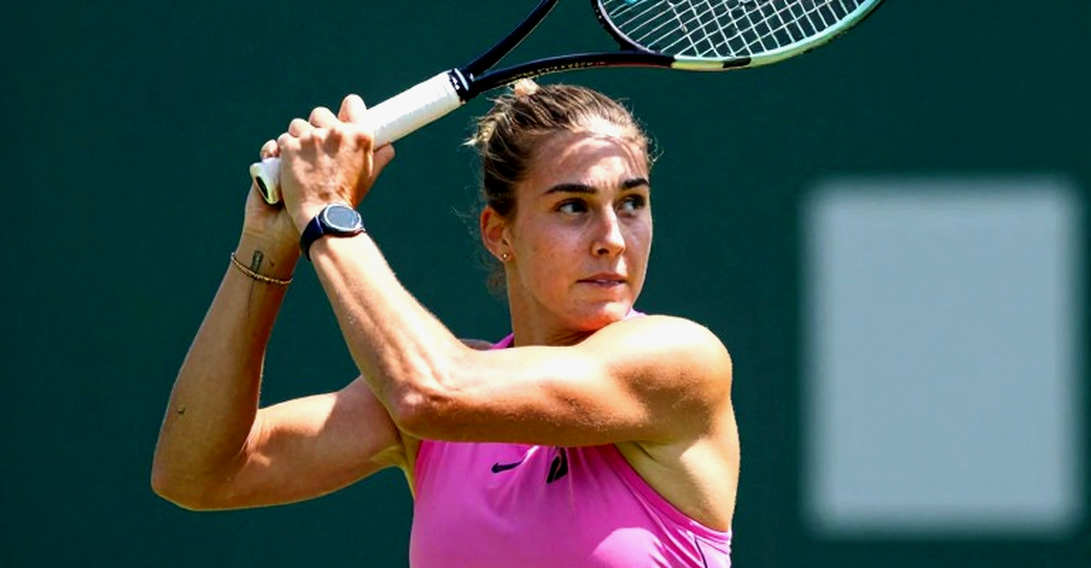
Context: one motion, one rebuild, and the tour's own marketing arm
Gauff's competitive identity has not changed in five years. She is an elite defensive baseliner with world-class movement and court coverage, and the serve was the single structural leak in that package. Roughly twelve months before the 2026 US Open she rebuilt her service motion. Twelve months is exactly the window in which a new motion looks settled in a press conference and does not look settled in a third set.
The season map is clean: 47-15, a 75.8% win rate; the Cincinnati WTA 1000 title, won dropping just one set all week; finals lost in Miami and Rome; semifinals in Dubai, Toronto, Wimbledon and the US Open. Top five for most of the year, a brief exit after the clay swing, re-entry after the Wimbledon semifinal.
One transparency note matters. This piece was published on the WTA's own website, inside a tour-operated promotional series. That does not make its numbers false. It makes the interpretive layer — "weapon" — a house narrative rather than an independent finding. The tour sells its tickets through transformation arcs, because transformation sells and steadiness does not.
Methodology note: every qualitative claim here is weighted against a number. Where no number exists, I declined to draw a conclusion. That is not an incomplete analysis; it is an honest one.
Core: five data points that do not match the headline
First, the evidence base rests on a single statistic. The only hard serve number available is the 12 double faults in the US Open quarterfinal. No ace rate, no first-serve percentage, no first- or second-serve points won, no double-fault rate per match. A technical transformation of that magnitude cannot be proven or refuted on this base. The claim must be downgraded: directionally plausible, quantitatively unproven.
Second, the article's strongest number cuts against its own thesis. Winning a Slam quarterfinal with 12 double faults and 42 unforced errors does not show a weaponised serve. It shows a serve that remains volatile under pressure, rescued by elite defence, movement and competitive resilience. The article calls that match the emblem of her resilience — correct — and then credits the season to the serve. Those are two different explanations, and the data favours the second.
Third, the real technical story is rebalancing, not weaponisation. Cincinnati was won dropping one set: a week in which the serve barely leaked. The US Open quarterfinal was won while the serve leaked heavily. The season pattern says something specific: the serve has risen from liability to neutral on good days, and reverts under Slam-level knockout pressure. Note that women's Slams are also best-of-three, so the difference is not match length but knockout pressure and accumulated load — which is where the ledger matters more than the mechanics.
The behaviour is bimodal: efficient in low-pressure three-set weeks, regression-prone in knockout Slams. That is the signature of a rebuilt motion that is not yet grooved under fatigue. The fault is not in the motion; it is in the load the motion is being run under.
Fourth, the conversion arithmetic is stark. 47 wins, a 75.8% rate, seven deep runs at the top two tiers — title-contender consistency. One trophy from those seven opportunities — not title-contender closing. One win from three finals is 33% conversion. And I will not fake an answer: the source material does not include final-round scorelines, so I cannot separate opponent quality from closing mechanics. No baseline, no verdict.
Fifth, the 12 comeback wins are double-edged. Tied with Jessica Pegula for the tour lead. The same number supports two opposite stories — calm under pressure, or chronic slow starts. The available data cannot separate them. Historically, tour leaders in comeback wins regress the following season unless the underlying cause is fixed; a technical cause is fixable, a temperamental one is not.
This is where the round-robin format becomes decisive. Eight players, group stage, then semifinals, maximum 1,500 ranking points. Round-robin punishes exactly the profile Gauff has shown: slow starts and unforced-error variance. Her career WTA Finals record is 7-8 across five appearances, below her overall tour win rate. The arithmetic is unkind — if the 2026 title run supplied four or five of those seven wins, the other four appearances produced two or three wins total. Her seed looks bigger than her record.
But the format cuts both ways, and this is the nuance most analysis skips: round-robin is forgiving in one specific sense. A bad night at a Slam knockout ends the fortnight; a bad night in the group stage costs only set difference. The slow starter gets a second life here — provided she does not take 12 double faults into the opening match.
Sixth, the load ledger. 62 matches and seven deep runs across three surfaces — hard, clay, grass. Dubai, Miami, Rome, Toronto, Wimbledon, New York, Cincinnati: a long queue of time zones. And the most interesting sequence of all: a title-less August, then the Cincinnati title, then the US Open semifinal. Peaking in the final third of the season is the most favourable possible input for a year-end event. It also suggests a comparatively light late-summer schedule, which is sensible management for a player running a rebuilt motion.
That judgement will be tested. In 2027 she must defend Cincinnati, the Miami and Rome finals, and four semifinals — a heavy, diffuse defence that does not sit on any single tournament. By contrast, the 2026 WTA Finals carry no defending-champion burden for her, because her title was 2026. Pure upside.
Seventh, the ranking's substance. One WTA 1000 title, two 1000 finals, four Slam/1000 semifinals produce a flat, broad points base rather than a single-tournament spike. That is the healthiest possible composition, because one early exit cannot break it. Her only ranking dip came with a surface transition, not a form collapse. This is a level-driven ranking, not a luck-driven one.
And the designated shot of the year — a full-court sprint to a short ball, then a backhand passing winner — is a point won with legs, not with the toss. Both facts sit on the same page. The article did not connect them.
The contrarian angle: the double faults are not a defect, they are the price
My counter-intuitive read is that the double faults are not this season's flaw; they are this season's invoice. When a player rebuilds a motion twelve months out, year one is paid in errors, because a new motion is better than the old one but not yet familiar. A familiar motion does not bend under pressure, even if its ceiling is lower.
The real risk, then, is not the serve but the priority order. If the off-season is spent entirely on toss and follow-through while the movement work, the foot care and the 62-match load management slip, Gauff will mortgage the thing that actually wins her matches for a stroke that only needs to be average-plus for the rest of the package to be top-three.
The second point no tour-operated series will make: the commercially attractive story is systematically the one the data can least support. "Weakness into weapon" sells tickets and demands no evidence. "Raised from liability to neutral, still reverting under pressure" sells nothing and is remembered by no one. It is also the only version useful for forecasting.
Takeaway: what to watch is not the trophy
I will not write a single-number verdict. Watch two things: the double-fault count in her opening round-robin match, and her first-serve percentage in the third set. If both hold clean, the "weapon" argument reopens. If they do not, this is the season that proves the point — Gauff wins with her legs, and her serve only has to be good enough to let them work. No baseline, no verdict.